
Can Gustavo Dudamel Save Classical Music?
The New York Times’ weekend episode of The Daily has a bold headline: Classical Music Is in Crisis. Gustavo Dudamel Is Here to Save It.
The premise is understandable. Dudamel is one of the few conductors with genuine cultural visibility beyond the concert hall. He has worked across film, popular music, education, civic events, and contemporary composition. In Los Angeles, he helped expand the Philharmonic’s public profile, championed new work, supported youth music initiatives, and became closely identified with a more open and energetic vision of orchestral culture.
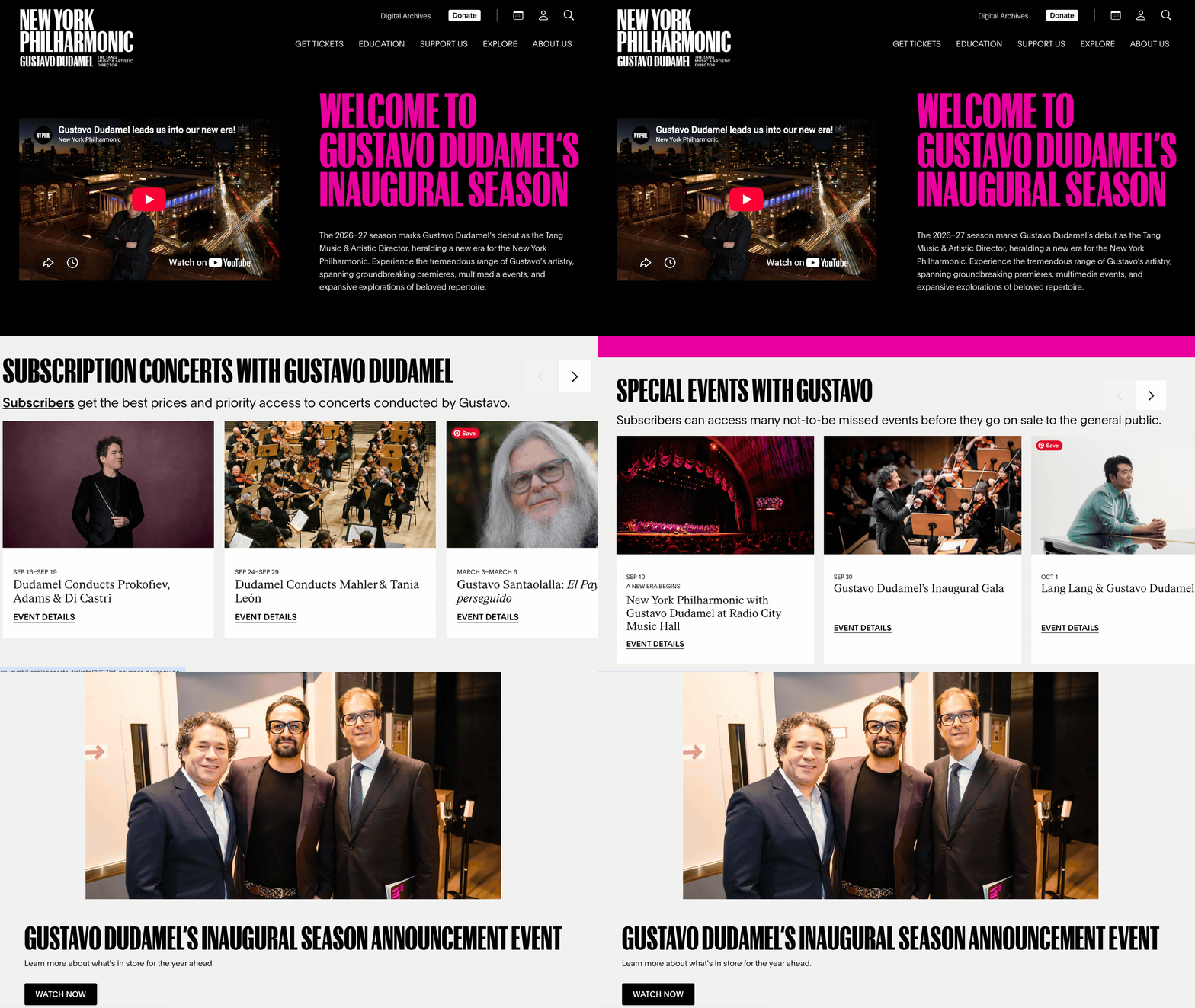
The New York Philharmonic is positioning his arrival as a major institutional moment. Its website is organized heavily around “Gustavo Dudamel’s inaugural season,” with subscription packages, special events, gala programming, and artist collaborations all foregrounding his name.
The message is clear: Dudamel is not just the orchestra’s new music director. He is a central part of its strategy for attracting attention and renewing public interest.
The appeal of the charismatic-leader strategy
Classical music has a well-documented audience problem. Negative substitution persists. Subscription habits have weakened, younger audiences are hard to cultivate, and the art form occupies a much smaller place in mainstream culture than it did during the eras of Toscanini or Bernstein.
Dudamel offers something institutions can’t possess on their own: personal magnetism. He’s recognizable, expressive, media-friendly, and able to move comfortably between canonical repertoire, new music, film scores, celebrity collaborations, youth programs, and civic events.
For an orchestra trying to reclaim public attention, those qualities are valuable. They can reduce psychological distance, generate press, create curiosity, and make an institution feel more connected to contemporary culture.
Attention is not the same as demand
But attention alone does not answer a more difficult question: why should someone who is not already committed to orchestral music decide that a Philharmonic concert is worth their time, money, and energy?
A charismatic conductor can strengthen the appeal of an experience people already value. But what about the nonconsumers—the people who do not yet see the orchestra as relevant to their lives?
A common response to declining demand is to change what is presented or how it’s presented. Arts organizations commission new work. They perform in new venues. They swap out music directors. They partner with celebrities. They modernize branding. They create education programs. They try to make the institution feel more contemporary.
These are all supply-side interventions. They begin with the organization and ask how the organization can become more appealing.
A demand-side approach begins elsewhere: with the patron’s life.
People are looking for relief from stress, time away from screens, a way to rekindle their relationship with a partner, a sense of belonging. An arts event can serve those needs in uniquely salient ways.
The strategic question is whether the institution understands those needs well enough to make the connection visible for nonconsumers. That requires more than cultural prestige or star power.
A conductor is not a value proposition
The audience challenges facing classical music developed over decades. They reflect changes in consumer behavior, media consumption, subscription habits, competition for attention, and more.
A single music director, however influential, cannot resolve all of those forces. Because he occupies one specific place within a much larger organizational structure:
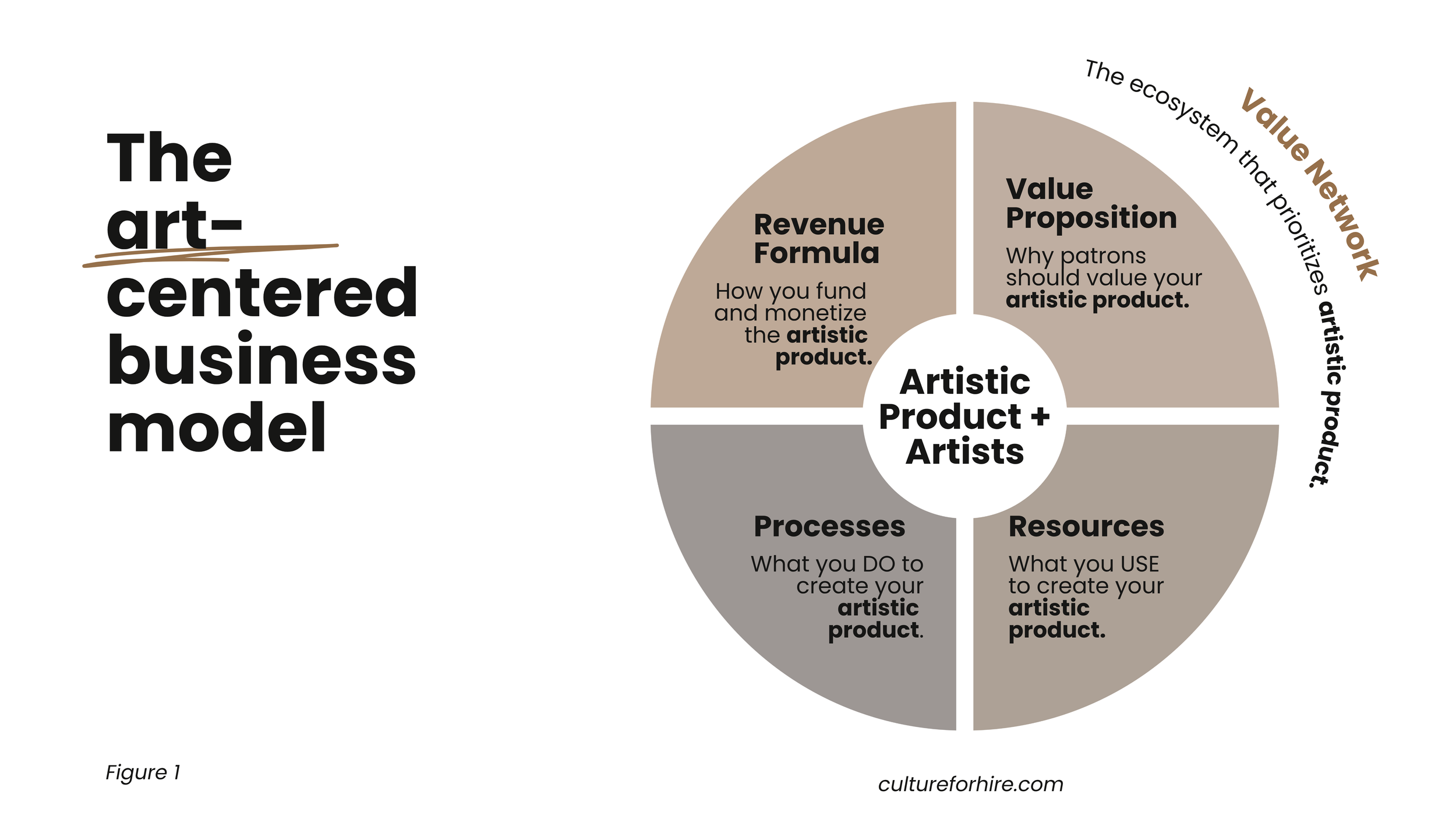
In an orchestra’s business model (see Figure 1), the music director is considered a resource—arguably one of the most powerful resources the institution can have.
But while a resource is essential to delivering value, it is not a value proposition.
The value proposition is the answer to why someone who isn't already inside the world of orchestral music should care. Everything else in the model is built to serve that answer.
When an institution puts its star conductor at the center of its strategy, it risks repeating a familiar mistake: confusing the thing that delivers value with the value itself.
"You should buy tickets because Dudamel is conducting" follows the same logic as "You should buy tickets because we make excellent art." Both assume the audience already understands why the art matters. Neither points to what drives patron behavior.
A patron-centered business model is different (see Figure 2). It starts with understanding the outcomes people are seeking that an orchestral experience can provide—and then building around those needs. The patron-centered value proposition says “You should buy tickets because our art can meet the needs you’re facing right now.” That’s the relevant doorway from a nonconsumer’s world to the art itself.

Without that demand-side understanding, the organization may become more visible without becoming more necessary.
Building relevance that can outlast the leader
The New York Philharmonic is making a bet on Dudamel, and there are good reasons for doing so. He brings attention, credibility, artistic ambition, and broad cultural range. Some of that is aimed at ticket buyers. Some of it is aimed at insiders—donors and board members—for whom prestige itself is often part of the draw.
But a charismatic leader can create extraordinary cultural attention without giving the institution a repeatable way to create demand once he is gone.
None of this argues against Dudamel. It argues for pairing his extraordinary appeal with a deeper understanding of what would make the Philharmonic relevant to people who do not already value it.
The long-term test is whether the Philharmonic can convert that attention into a stronger understanding of audience demand—and then use that understanding to build lasting relevance beyond any conductor’s personal brand.
That would be a far more durable achievement.
Rethink your value proposition
A value proposition should do more than describe the art and the artists. It should connect what your organization offers to what people are actually seeking in their lives—and give the rest of your business model something meaningful to organize around.
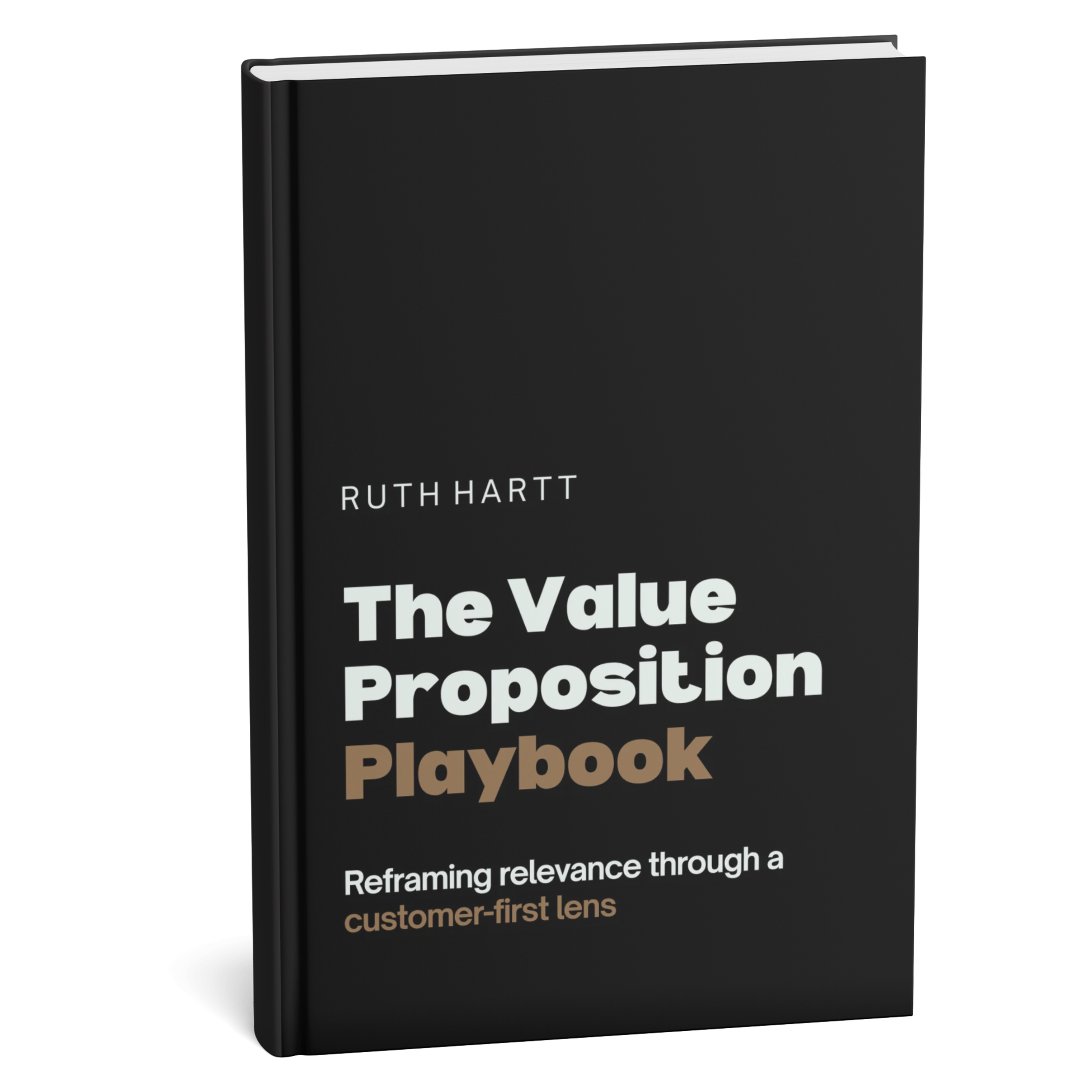
Download the free 10-page Value Proposition Playbook to identify the patron outcomes you can uniquely deliver and build a stronger reason for audiences to care.
Related reading






Can need-based intelligence increase engagement and drive higher ticket sales? A 16-week controlled test at the New Bedford Symphony.