Built for a Different World: The Arts Sector Business Model Problem
Arts leaders aren't naturally resistant to change and innovation. But it often feels that way.
You introduce an innovative new program. Or refresh your branding. Or launch a pilot initiative. And in no time at all, your organization snaps right back to “how we’ve always done things.”
It's easy to assume this is a leadership problem.
But it's simply what happens when today’s decisions are being shaped by a model built for yesterday's world.
When you're stuck in this cycle, every change effort creates more friction than momentum. That outdated business model is an invisible but powerful architecture that you're pushing against every day.
And once you can see it, everything starts to make more sense.
People don’t fail. Systems fail.
To understand why the arts sector keeps running into the same problems, we need to look at the five elements that shape every business model.
Arts organizations aren’t struggling because they lack effort, talent, or vision. They’re struggling because they’re operating inside business models built for a different world.
A business model isn't your strategic plan or your mission statement or your revenue streams. It's a complex backend system that shapes everything you do. And it's built from five interconnected elements.
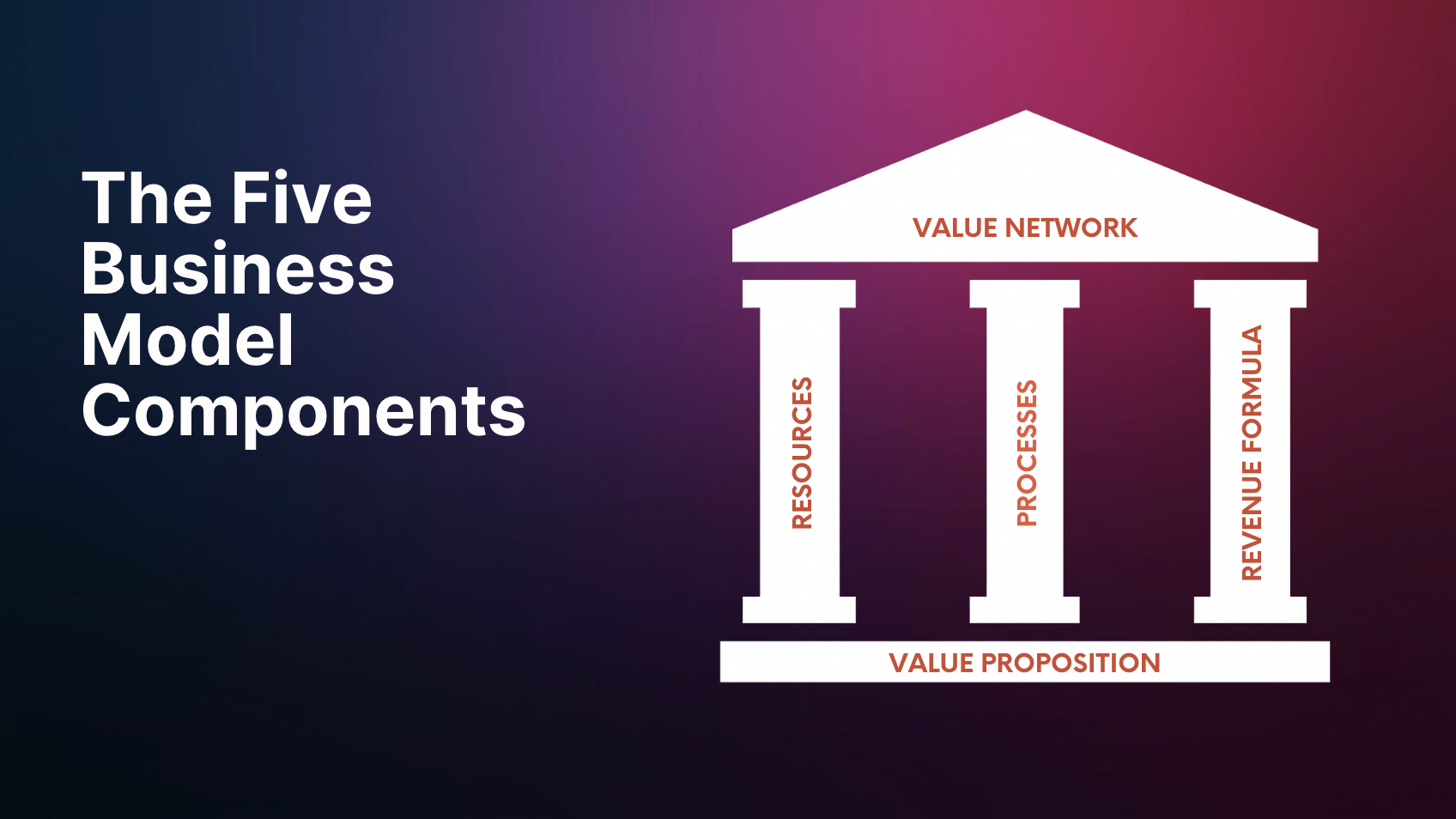
Element 1: Value Proposition
Your Value Proposition is the foundation of your entire system. When crafted well, your value proposition ensures your relevance by tying what you do to the outcomes consumers seek.
Externally, it’s how your audience understands why you matter in their world. It shows people why they should care, by answering five crucial questions.
Internally, your value proposition serves as your organization’s north star. It guides your entire organizational strategy, aligning teams around the specific problem you solve and the value you create.
Most arts organizations aren't built on an externally focused value proposition. Their systems are built around the product, not around the needs of the people they serve.
The result is a system oriented around itself. The art becomes the thing everything else is built to protect. And when the general public doesn't feel included in that cycle, the system slowly collapses under its own weight.
Audiences age out faster than they're replaced.
Marketing costs rise.
The art stays strong, but its relevance erodes.
Financial sustainability increasingly depends on emergency fundraising and endowment draws.
Element 2: Resources
Your resources are the people, technology, products, facilities, partnerships, tools, and funding you draw on to create and deliver your value proposition.
And, crucially, if the value proposition is centered on the customer outcome, the art is the resource that delivers that outcome. It’s still the heart of the experience; it’s just not the starting point of the business model.
Element 3: Processes
Your processes are your ways of working together: workflows, routines, traditions, budgets, decision-making habits. They're shaped by organizational history and by organizational structure.
And this is important: You can acquire a really innovative resource, but if it's not adopted and operationalized through your processes, it will die.
Element 4: Revenue Formula
Your Revenue Formula is how money flows in, what it costs to deliver your value proposition, and what incentives drive your priorities.
If subscriptions are your main source of revenue, you will probably optimize for retention over diversity or experimentation.
How do incentives work in a business model? Spotify and Patreon offer the perfect example.
Spotify's revenue comes from subscribers. So they optimize for keeping you listening, with endless playlists that are comfortably familiar. And they pay artists as little as possible. Patreon's revenue comes from artists' success. So they build tools to help these artists succeed.
Same industry. Opposite priorities. Where the money comes from determines the strategy.
It’s the same dynamic in the arts. If your revenue comes from donors who fund 'artistic excellence,' your priority becomes protecting that excellence—even when audiences aren't responding.
The value proposition sets your intent; the revenue formula sets your behavior.
And the value network reinforces—or resists—that behavior externally.
Element 5: Value Network
Your value network is your ecosystem of funders, partners, stakeholders, industry norms. It sets the guardrails for what you are optimized to do.
This is where your metrics of success come from.
If your funders only reward attendance numbers, if your peers measure success by earned revenue, if the industry standards say 'prestige over access'—your value network will pull you right back toward the product-first model.
Which means building a customer-first model isn't just about internal alignment. It's about choosing your funders, your partners, and your measures of success intentionally.
Why the Status Quo Keeps Winning
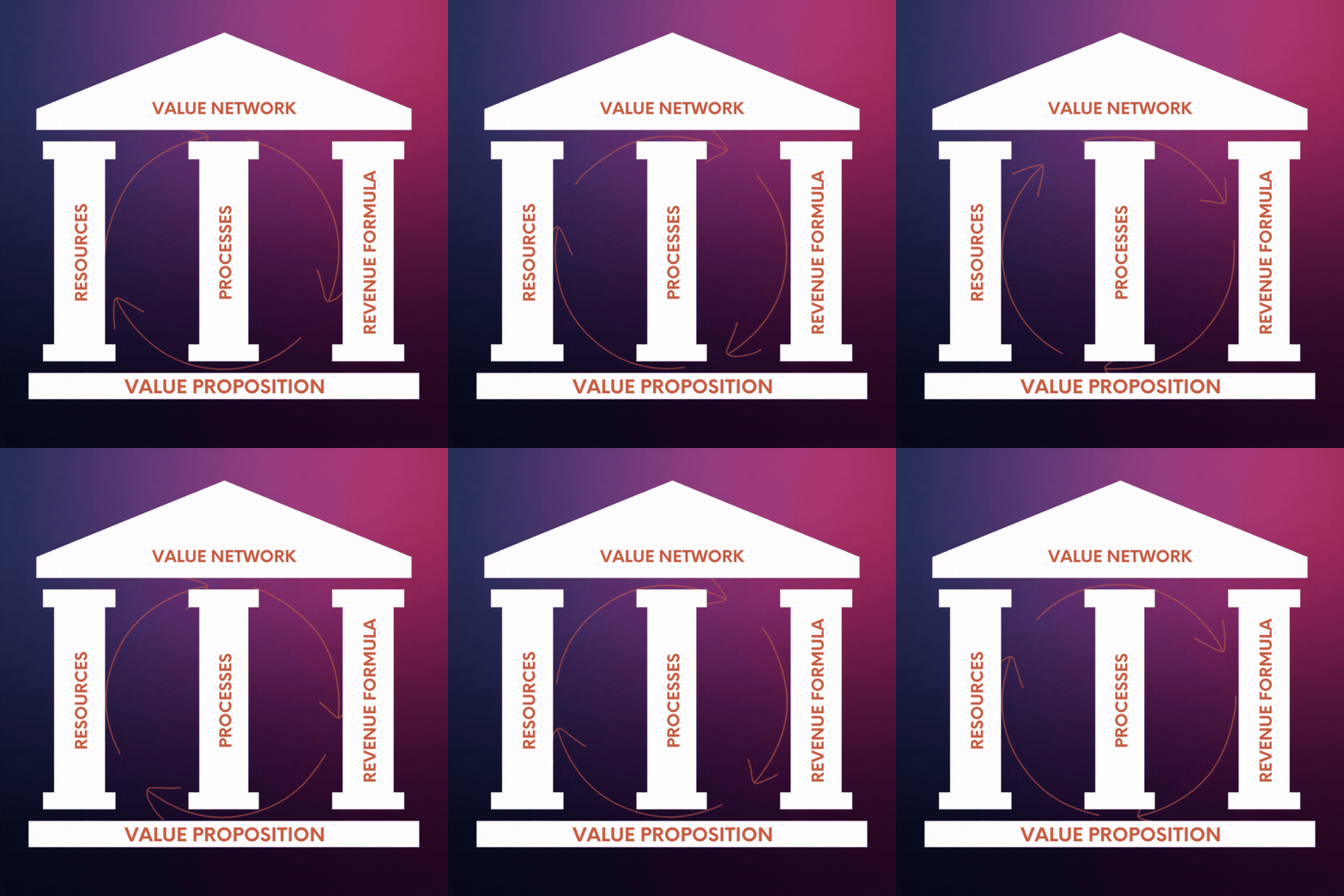
For years, arts organizations have tried incremental fixes: fresh branding, new partnerships, more accessible repertoire.
But here's why those efforts haven't moved the needle:
You can't innovate your way out of declining ticket sales without addressing the invisible system that shapes your organization.
The entire model has to shift—starting with the foundation—or you'll just keep getting pulled back to the status quo.
Because a business model is specifically designed to protect the status quo.
This is actually a positive feature when the model is healthy and built on relevance—aligned with what consumers need. It creates stability, efficiency, and the ability to scale.
But for arts orgs running 50-year-old models, the system is actively working against adaptation—not because anyone is being stubborn or short-sighted, but because that's what business models do.
They protect and reinforce the value proposition, even if it's no longer relevant.
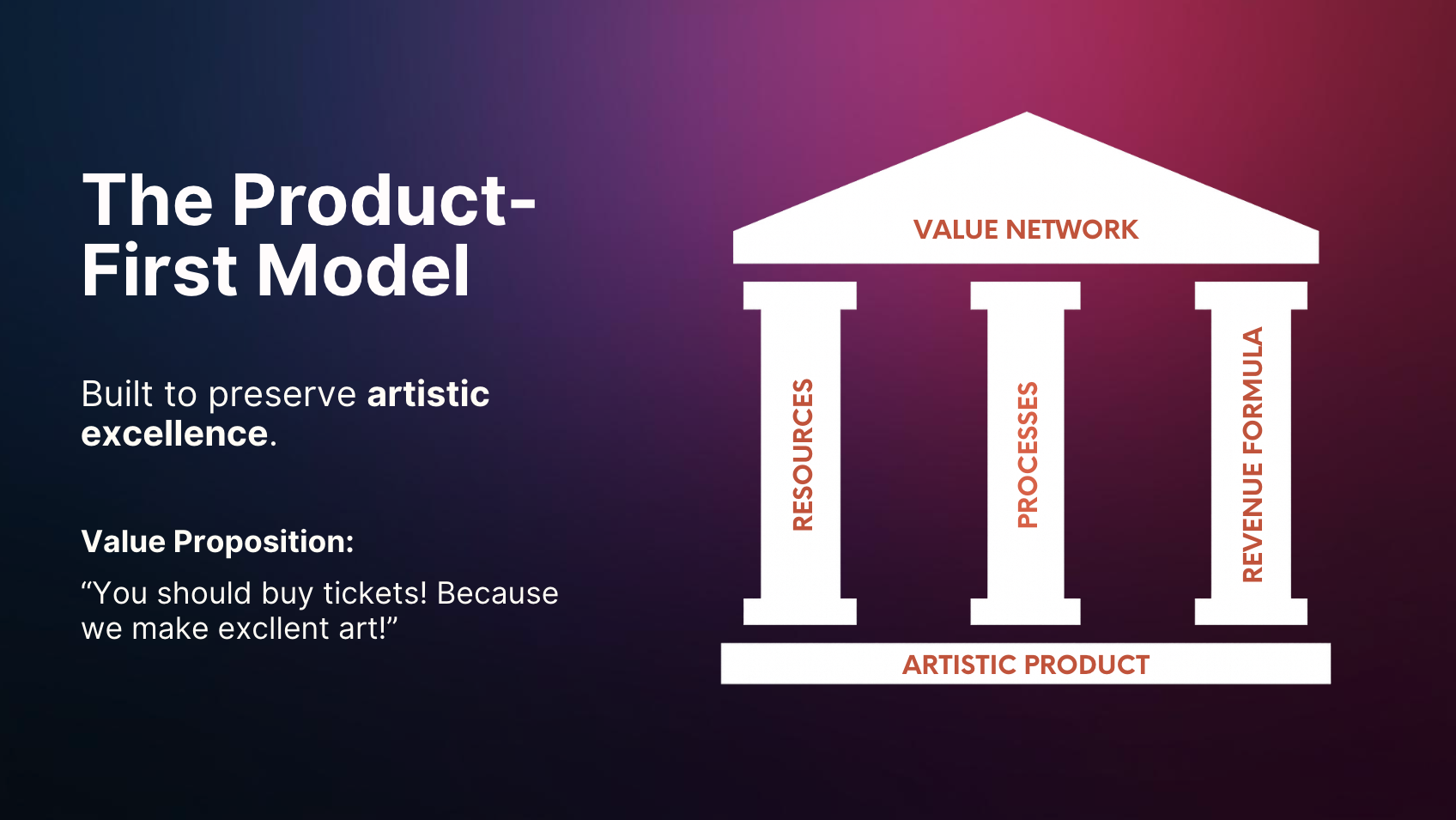
The Product-First Model
In the traditional arts business model, the foundation is artistic excellence. Every resource, process, and incentive is optimized around one thing: preserving that excellence.
Your value proposition to the public is simple: “You should buy tickets because we make excellent art.”
But excellent art isn't what most people need right now. What they actually need are the outcomes that art provides. That doesn’t mean excellence doesn’t matter. It means excellence alone is no longer a viable value proposition.
When the digital revolution shifted consumer priorities—when people started seeking wellness, connection, stress relief, community—this value proposition (and thus the entire model) became a liability.
It wasn't designed for today's audiences. Or today's challenges.
And because every element of the model is locked around protecting the art, the system can't adapt.
This is why so many organizations keep having the same meeting every season. Attendance softens. Marketing gets blamed. A pilot launches. And six months later, nothing has changed.
When audiences don't show up, there's only one lever to pull: the financial one.
Lower the price
Subsidize
Cut staff
Cut programming
The model collapses under its own weight because it's built to protect something—artistic excellence—instead of serving the people you're trying to reach.
There’s a better way to build. And you already have the ingredients. Your art creates real outcomes. Your audience has real needs. Your job is connecting those two things. It doesn't require abandoning your mission—it requires understanding your audience well enough to frame it in a way that speaks to what they're actually seeking.
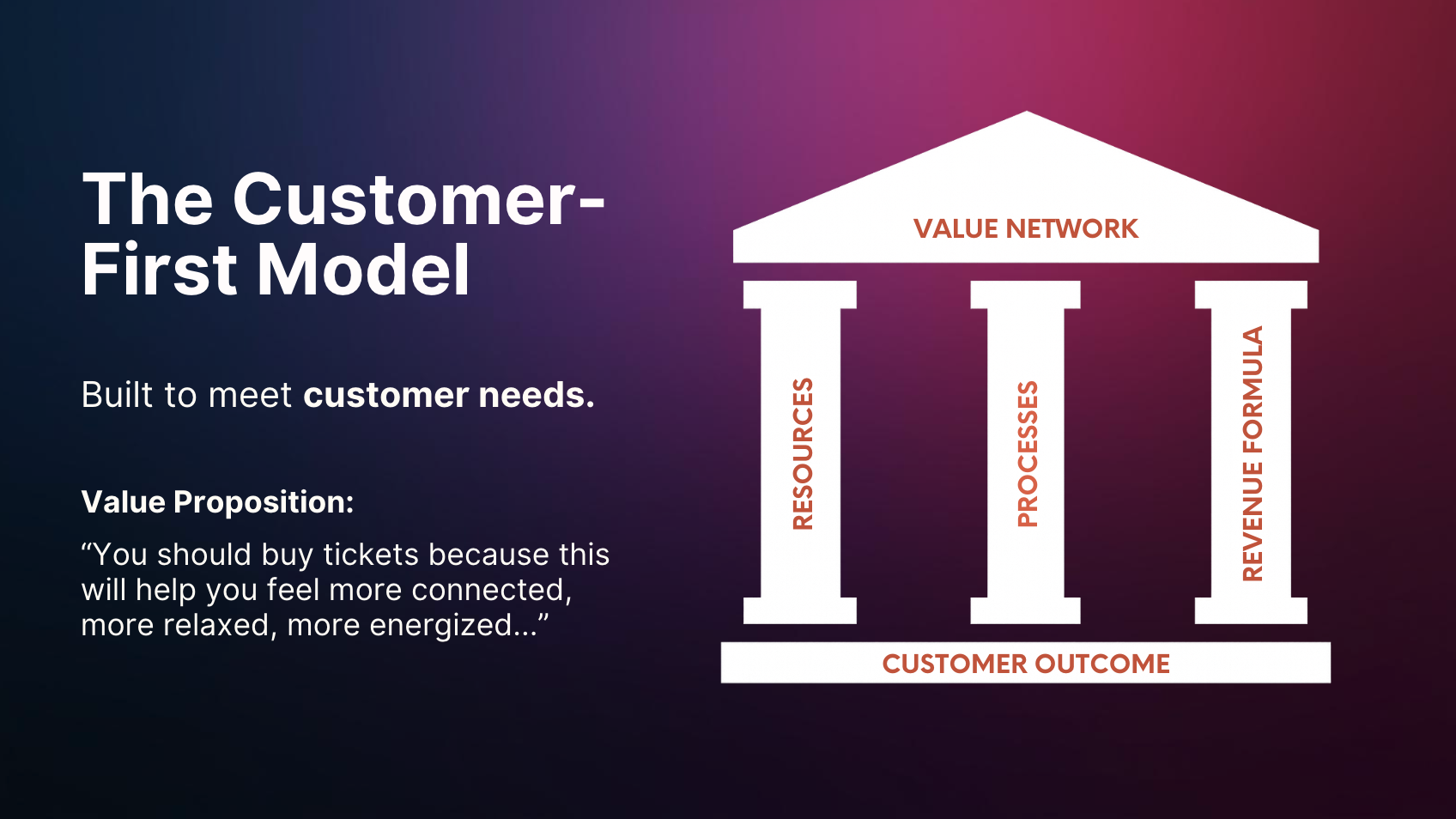
The Customer-First Business Model
When the customer outcome becomes your foundation, everything changes.
Your value proposition says to the general public: “You should buy tickets because this will help you feel more connected, more grounded, more relaxed, more energized.”
When your value proposition is grounded in customer outcomes, you create inclusion by design—you're serving need, not demographic assumption. People see themselves in your offer, regardless of their profile. Through relevant messaging, you are removing one very important barrier of accessibility: “This is not for me.”
Suddenly you stop having one lever and start having many.
Next Steps
I’ve created a free Value Proposition Playbook to get you started.
Download the free playbook.